
What “Kinesiology-Based Training” Really Means
Train with purpose. Move like your body was designed to.
You’ve probably seen the phrase “kinesiology-based training” used in the fitness world.
But what does it actually mean, beyond marketing language?
Let’s go deeper. This isn’t about trendy workouts.It’s about applying movement science to create a body that performs better, stays safer, and lasts longer.
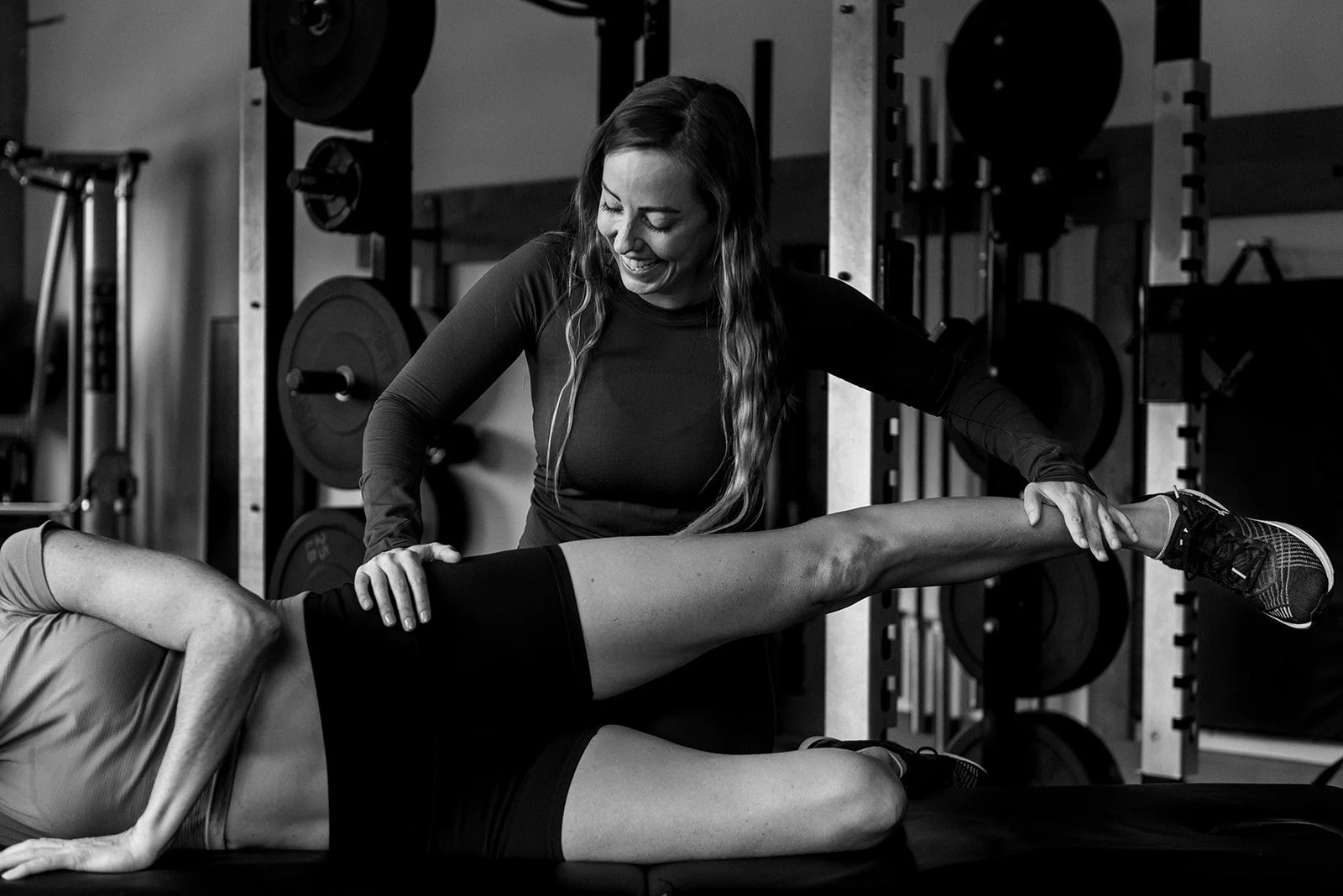
1. The Science Behind Kinesiology-Based Training
What is kinesiology, really?
Kinesiology is the scientific study of human movement, integrating anatomy, physiology, biomechanics, and neuroscience to understand how the body moves and adapts to physical demands.
In practical terms, that means:
How joints move
How muscles coordinate
How force travels through the body
How the nervous system controls motion
So when we say kinesiology-based training, we mean: Training guided by how the body actually functions, not just how workouts look.
2. Whole-Body Biomechanics: Not Just Muscles
Traditional workouts often isolate muscles.
Kinesiology-based training focuses on movement systems.
Why biomechanics matters
Biomechanics analyzes how forces interact with the body and how joints and tissues respond during movement.
That includes:
Joint alignment
Force distribution
Movement efficiency
Injury risk
Example: A squat is not just a “leg exercise.” It’s a coordinated interaction between:
Ankles (mobility & stability)
Knees (force transfer)
Hips (power production)
Spine (load management)
Training without understanding this chain = training blindly.
Training with biomechanics = training intelligently.
3. Nothing Is Random: Every Exercise Has a Purpose
In kinesiology-driven coaching, exercise selection is intentional.
Movement assessment can reveal abnormal mechanics, allowing more precise corrective programming that improves performance and helps reduce injury risk.
That means:
No random circuits
No trendy fluff
No generic templates
Instead, we select exercises based on: Your movement quality + Your goals + Your current capacity
Purpose before intensity. Always.
4. Form Before Load: The Joint-First Philosophy
A key principle of kinesiology-based training is: Stability and control come before strength.
Why?
Because muscles don’t work alone, they operate within joints, and joints must be stable and mobile in the right balance to produce safe force.
We assess:
Joint mobility
Stability deficits
Muscle activation patterns
Compensation strategies
This approach helps identify weak links before adding intensity, improving progress while helping reduce overload and injury risk.
In short: You don’t earn weight by sweating. You earn weight by moving well.
5. It’s Not About Burnout, It’s About Adaptation
Many programs chase fatigue. We chase adaptation.
The goal isn’t exhaustion, random soreness, or pushing through dysfunction.
The goal is improved motor control, efficient movement patterns, and progressive strength with integrity.
Because your body doesn’t adapt to chaos. It adapts to quality, repeatable patterns.
6. Progress That Builds a Durable Body
Consistent, well-coached training based on movement science leads to:
Stronger joints
Better posture
More efficient force production
Greater tolerance to physical stress
Our focus is long-term durability, not short-term exhaustion.
This is the difference between:
Training hard → breaking down
vs. Training smart → building up
7. The Nervous System: The Hidden Driver of Movement
Strength is not just muscular. It’s neurological.
Motor control and skill acquisition explain how the brain learns and refines movement patterns over time.
That’s why we emphasize:
High-quality repetitions
Clear technical feedback
Progressive complexity
You’re not just lifting weights. You’re teaching your body how to move better every single session.
8. Train Smart. Train Durable.
A kinesiology-based approach leads to a different training philosophy:
SMART - Every exercise has a role in improving function.
DURABLE - We build bodies that tolerate real-life stress, not just gym stress.
SUSTAINABLE - Progress is based on mechanics and intelligent progression — not burnout cycles.
9. Why Coaching Changes Everything
Because most people can’t see their own movement faults.
We coach by analyzing joint positioning, movement symmetry, control through range, and compensations under load. Then we adjust exercise selection, tempo, range of motion, and progression speed.
This is where real transformation happens, not from working harder, but from moving better.
Why This Approach Matters
Kinesiology-based training means:
Understanding the body as an integrated system
Prioritizing movement quality over fatigue
Building strength on a foundation of control
Progressing with intention, not randomness
It’s not about surviving workouts. It’s about engineering a body that lasts.
Train with purpose. Move like your body was meant to.
Because the goal isn’t just to get stronger today. It’s to stay strong for decades.