
Studio vs Online Training
In recent years, fitness has evolved. With traditional in-studio workouts and online training programs both available, it’s easier than ever to find a routine that fits your life. But each approach offers distinct benefits – and surprisingly, combining the two can often be the best strategy.
The Benefits of In-Studio Training
1. Real-Time Feedback and Technique Correction
One of the biggest advantages of working with a live coach is immediate feedback. Proper form reduces injury risk and ensures your workouts are effective. Studies show that coaching can significantly improve exercise technique, especially for beginners or those lifting heavier weights.
2. Motivation and Accountability
Working with a personal coach one-on-one provides motivation and accountability in a very direct way. Your coach can track your progress, celebrate wins with you, and adjust your plan if needed. Studies show that personalized coaching can significantly improve adherence to exercise programs because someone is actively supporting and guiding you through each step. Having that dedicated attention helps you stay consistent, push past plateaus, and feel confident in your workouts.
3. Structured Progression
In-studio sessions usually come with a structured program guided by a coach. This ensures that your workouts progress safely over time, balancing intensity, recovery, and skill development.
4. Focused Environment
Dedicated spaces with proper equipment and minimal distractions help improve focus, performance, and consistency.
Summary: In-studio training excels for personalized guidance, accountability, and structured progression.

The Benefits of Online Training
1. Flexibility and Convenience
Online programs allow you to exercise anytime, anywhere. Whether at home, on vacation, or during a busy workweek, you can stick to your routine without worrying about scheduling around a studio class.
2. Trackable Progress
Most online programs let you log reps, sets, and weights, which helps you track improvement over time. Some also include video form checks or community support, adding guidance without needing to be physically present.
3. Accessibility and Cost
Online training often comes at a fraction of the cost of in-person coaching, making structured workouts more accessible to a broader audience.
4. Self-Paced Learning
You can move at your own pace, repeat sessions, or skip exercises based on your energy, schedule, or ability.
Summary: Online training excels for flexibility, accessibility, and autonomy.
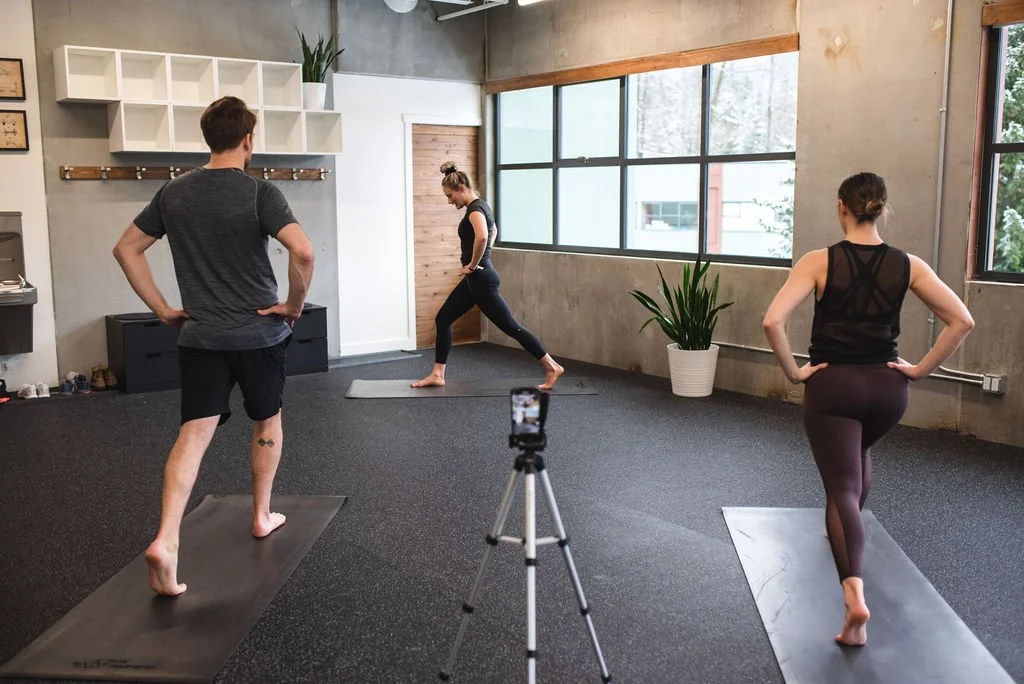
Why Combining Both Can Be Powerful
Research in exercise science shows that variety and consistency are key predictors of long-term fitness success.
Mixing in-studio and online workouts can:
Reduce risk of burnout and overuse injuries
Provide both social motivation and flexibility
Allow tailored progression with extra practice on off-days
Keep workouts interesting and sustainable
Many people use studio sessions for technical or heavy lifting, and online sessions for conditioning, mobility, or recovery, creating a balanced and adaptable fitness routine.
Fitness isn’t about choosing one method over the other. The best approach is the one that fits your lifestyle, keeps you consistent, and makes you enjoy moving your body.
Prefer coaching, guidance, and in-person accountability? Studio workouts shine.
Need flexibility, accessibility, and independence? Online programs are perfect.
Want the ultimate combination? Mix both – and reap the benefits of structure, motivation, and convenience.
Consistency and engagement matter more than the format. Choosing a system that fits your life is the real secret to long-term results.
At Peak, we get that everyone moves differently. You can join us in the studio with a coach, follow our online programs from home, or do a mix of both, whatever fits your life. Our goal is simple: to help you build strength, stay consistent, and actually enjoy your workouts. It’s not about forcing one way of training; it’s about giving you options that make fitness work for you.